Monday, April 2, 2012

Have you ever wondered what it would be like if you could transform yourself into an entirely different person?
Dr. Jekyll from Dr. Jekyll and Mr. Hyde by Robert Louis Stevenson did. His curiousity troubled him and led to his invention of a potion which transformed him into Mr. Hyde, an evil counterpart. Dr. Jekyll seemed unsatisfied with his current, ordinary and kind self and wanted to see what it would be like to seperate his good from evil. His product turned out to be Mr. Hyde, a murderer, rapist, and repulsive lier. To say the least, his life became much more entertaining after his discovery of the scientifically groundbreaking potion, however his life experiences took a turn for the worst. The positivity that he wanted to come out of his discovery was absent, because Mr. Hyde caused nothing but havoc, and instilled an addiction within his typically ordinary life.
Steve Urkel from the television show Family Matters had a similar desire to make himself and his life more entertaining. In order to do so, the young scientific genius discovered a morphing machine which changed him from a nerdy and unpopular kid to an attractive and desirable Stefan. With the personality of Stefan's he was finally able to get attention from his lifelong crush, Laura. A girl who would never think about an interest with Steve, but was in love with Stefan. Ultimately, the invention of Stefan discouraged Steve Urkel and made him hate himself even more. He wished he was Stefan rather than Steve, and that troubled his self confidence.
If I had the ability to make myself into another person, I'd most likely make myself really tall. Simply because I have always been short, and I want to experience what seeing over everyone's head seems like. But honestly, I'm comfortable with the way I am now, and don't really have a desire to make myself into another person.
Personally, I believe that the discovery of something which transforms you into another person caused nothing but issues. If these two were more confident in who they were, then the issues that their counterparts caused would have been avoided. However, these two stories were deffinately fascinating.
Steve Urkel
Stefan Urquelle

Sunday, March 4, 2012

Female Domesticity in Television

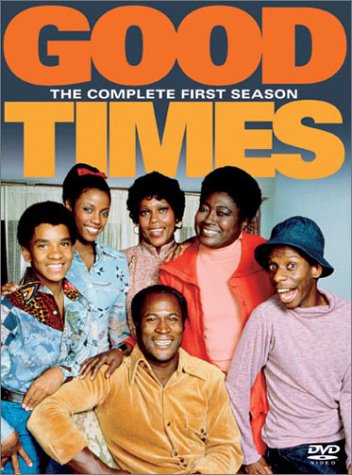
The socially cultured role of women tending to domestic roles has been evident in television for decades. In shows such as Goodtimes or The Brady Bunch, which both aired in the 70's, the mothers were never seen participating in the workplace. Especially in Goodtimes, the mother named Florida Evans specialized in cooking and making sure that everything was in good shape at home. While the mothers took care of the kids and domestic responsibilities, the men were relied on to bring in the family income. When the husband returned home, it seemed to be the wife's responsibility to cheer him up and relax his mind after a long day at work. This reminds me of the Home Economics curriculum that was taught back in 50's to women. They were pictured as people whos lives depended on their husbands, and his happiness.
The impact of television back in this time period had a direct impact on my parents' generation. The roles of women within these shows was based upon what was expected in the generations of my grandparents and their parents. These television shows were a supportive enforcer upon expected gender roles along with what they personally saw their own mothers and fathers doing.
It took television shows such as The Cosby Show and mothers such as Clair Huxtable to motivate women to get jobs such as being an attorney. Her role within society was not to simply be domestic like shows in the previous decade, but to bring in family income along with her husband. She exemplified the capabilities of women, and that they should strive beyond the domestic role in life.
Personally, I am glad that shows such as The Cosby Show, and The Fresh Prince of Bel-air came along to show that mothers could be great mothers along with having careers such as attorney, or college professor. These shows were motivating to women, and were an influence on the common American women of today who strives beyond the domestic role.
TV Show From the 70's

TV Show from the 80's


Tuesday, January 31, 2012

A Mother's Love

Alot of people find it extremely controversial when a mother finds it necessary to leave her children and duties as a mother in order to fulfill personal aspirations. The issue within this is that society has made it much more of a problem than if a father chooses to make the same decision. Personal happiness is key, however it can be considered inhumane for a parent, especially a mother to abandon a child in which she was one with for nine months and has a natural bond with.
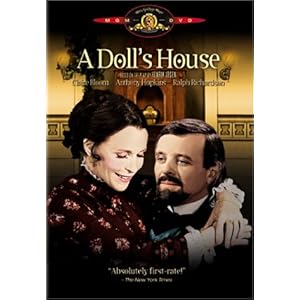
Within the short story titled A Doll's House by Henrik Ibsen, a mother, nora, finds it necessary to leave her family and kids in order to create her own fate and relieve her children from the burdens of her bad mothering tendencies. She states that she loves them, however she does not want to give her own SELF for them. She believes that her aspirations in life, and overcoming the normalities of society is the most important thing for her, therefore she leaves the family to pursue her dreams.
The issues that Nora has with her duties as a mother opposed to what she wants personally, reminds me of the novel My Sister's Keeper, by Jodi Picoult. However, this novel does not have to do with a mothers love, it is a sister's love. A sister whose aspirations in life have been put on the back burner due to her responsibility of being her sister's personal donor. Similar to Nora, she wants the best for the one that she loves, however she believes that her own goals in life are better for herself in order to feel valuable in life.
Altogether, I understand the character's desires to achieve their true potential in life. They understand that they are valuable and have the potential to overcome the circumstances in their life that keeps their progression stagnant.