Monday, April 2, 2012

Have you ever wondered what it would be like if you could transform yourself into an entirely different person?
Dr. Jekyll from Dr. Jekyll and Mr. Hyde by Robert Louis Stevenson did. His curiousity troubled him and led to his invention of a potion which transformed him into Mr. Hyde, an evil counterpart. Dr. Jekyll seemed unsatisfied with his current, ordinary and kind self and wanted to see what it would be like to seperate his good from evil. His product turned out to be Mr. Hyde, a murderer, rapist, and repulsive lier. To say the least, his life became much more entertaining after his discovery of the scientifically groundbreaking potion, however his life experiences took a turn for the worst. The positivity that he wanted to come out of his discovery was absent, because Mr. Hyde caused nothing but havoc, and instilled an addiction within his typically ordinary life.
Steve Urkel from the television show Family Matters had a similar desire to make himself and his life more entertaining. In order to do so, the young scientific genius discovered a morphing machine which changed him from a nerdy and unpopular kid to an attractive and desirable Stefan. With the personality of Stefan's he was finally able to get attention from his lifelong crush, Laura. A girl who would never think about an interest with Steve, but was in love with Stefan. Ultimately, the invention of Stefan discouraged Steve Urkel and made him hate himself even more. He wished he was Stefan rather than Steve, and that troubled his self confidence.
If I had the ability to make myself into another person, I'd most likely make myself really tall. Simply because I have always been short, and I want to experience what seeing over everyone's head seems like. But honestly, I'm comfortable with the way I am now, and don't really have a desire to make myself into another person.
Personally, I believe that the discovery of something which transforms you into another person caused nothing but issues. If these two were more confident in who they were, then the issues that their counterparts caused would have been avoided. However, these two stories were deffinately fascinating.
Steve Urkel
Stefan Urquelle

Sunday, March 4, 2012

Female Domesticity in Television

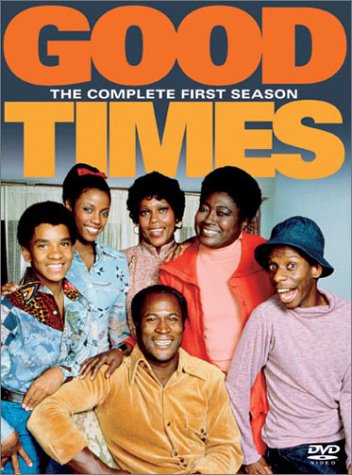
The socially cultured role of women tending to domestic roles has been evident in television for decades. In shows such as Goodtimes or The Brady Bunch, which both aired in the 70's, the mothers were never seen participating in the workplace. Especially in Goodtimes, the mother named Florida Evans specialized in cooking and making sure that everything was in good shape at home. While the mothers took care of the kids and domestic responsibilities, the men were relied on to bring in the family income. When the husband returned home, it seemed to be the wife's responsibility to cheer him up and relax his mind after a long day at work. This reminds me of the Home Economics curriculum that was taught back in 50's to women. They were pictured as people whos lives depended on their husbands, and his happiness.
The impact of television back in this time period had a direct impact on my parents' generation. The roles of women within these shows was based upon what was expected in the generations of my grandparents and their parents. These television shows were a supportive enforcer upon expected gender roles along with what they personally saw their own mothers and fathers doing.
It took television shows such as The Cosby Show and mothers such as Clair Huxtable to motivate women to get jobs such as being an attorney. Her role within society was not to simply be domestic like shows in the previous decade, but to bring in family income along with her husband. She exemplified the capabilities of women, and that they should strive beyond the domestic role in life.
Personally, I am glad that shows such as The Cosby Show, and The Fresh Prince of Bel-air came along to show that mothers could be great mothers along with having careers such as attorney, or college professor. These shows were motivating to women, and were an influence on the common American women of today who strives beyond the domestic role.
TV Show From the 70's

TV Show from the 80's


Tuesday, January 31, 2012

A Mother's Love

Alot of people find it extremely controversial when a mother finds it necessary to leave her children and duties as a mother in order to fulfill personal aspirations. The issue within this is that society has made it much more of a problem than if a father chooses to make the same decision. Personal happiness is key, however it can be considered inhumane for a parent, especially a mother to abandon a child in which she was one with for nine months and has a natural bond with.
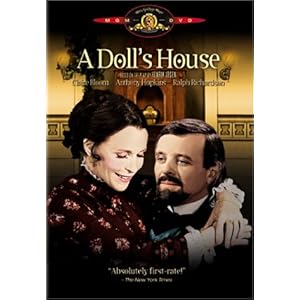
Within the short story titled A Doll's House by Henrik Ibsen, a mother, nora, finds it necessary to leave her family and kids in order to create her own fate and relieve her children from the burdens of her bad mothering tendencies. She states that she loves them, however she does not want to give her own SELF for them. She believes that her aspirations in life, and overcoming the normalities of society is the most important thing for her, therefore she leaves the family to pursue her dreams.
The issues that Nora has with her duties as a mother opposed to what she wants personally, reminds me of the novel My Sister's Keeper, by Jodi Picoult. However, this novel does not have to do with a mothers love, it is a sister's love. A sister whose aspirations in life have been put on the back burner due to her responsibility of being her sister's personal donor. Similar to Nora, she wants the best for the one that she loves, however she believes that her own goals in life are better for herself in order to feel valuable in life.
Altogether, I understand the character's desires to achieve their true potential in life. They understand that they are valuable and have the potential to overcome the circumstances in their life that keeps their progression stagnant.

Thursday, December 29, 2011

Cultural Relativism Response

The world is comprised of thousands of cultures, which are all special in their own unique way. Centuries of endless molding and changing of a culture by ancestors has contributed to the pride that people have in them and reluctance to change. Similar to King Darius I, when comparing the customs of a personal culture to another, components of the other may be thought of as taboo. Considering that people grow and are being trained to condition culturally to the customs of a culture since birth, it is expected that foreign customs may be thought of as immoral or unethical. However, the importance of the relativity of one culture to another is discovering that one cannot factually be considered better than the other. People most develop more open minds and the only way to do so is to understand that our beliefs are the result of cultural conditioning and these conditions vary across the world. People's feelings towards a culture are not actually perceptions of the truth because of their cultural conditioning.
This issue can be related to the novel Things Fall Apart, by Chinua Achebe, and Okonkwo's secure reluctance to accept the Christian culture that was "invading" his native land. If Okonkwo would understand that his native culture is not necessarily better than that of the Christians, his feelings of misunderstanding would not have led to his suicidal downfall.
Altogether, I believe that the discovery of this from many prejudice people in the world would diminish any hardships that are caused because one group of people is different than the other. If Hitler would have only discovered that the German people are not better than the Jewish, the killing of millions of innocent individuals would have been avoided. Currently, misunderstandings of other cultures continues to be an issue in our society, and people must learn to accept the customs of different people in order for a more unified world.

Darius I, King of Persia was fascinated with the cultural differences around the world


Tuesday, November 29, 2011

A "King's" Downfall


Joe Paterno
Many believe that tragedy affects the royal who possess the capability of experiencing a downfall because of their power. However, what if that person is not of royal descent, but is a symbol of an entire community's loyal and legendary reputation? Recently, America has had their eyes focused upon Penn State University and their current child sexual abuse scandal. Amidst the allegations of child sexual abuse actions committed by former Assistant Football coach Jerry Sandusky, the downfall of the University's 46 year head football coach Joe Paterno occurred. Over the coarse of his coaching career, Joe Paterno, "JoePa," developed to become a Penn State legend. He was recognized as a coach, educator, and humanitarian who alumni and supporters admired as a model citizen. Up until his downfall, his popularity continued to increase and he achieved the record of being the all time most winning coach in Division 1 football history.
"JoePa" caused his own downfall from superiority. Many years back when he first heard of Jerry Sandusky's disgusting actions, he failed to do what ever he could to end the abuse. Although he notified his higher powers about Jerry's abuse when he discovered it, he failed to make sure that Sandusky was punished after no further actions were taken. When the Jerry Sandusky scandal became public in 2011, Joe Paterno was fired from his coaching position by the University's trustees mid-season. 
Joe Paterno is a present day man who became a tragic hero. He developed a kingly persona and his bad decisions during a crisis led to the downfall of his own reputation and the reputation of the University that he represented.
Arthur Miller defines tragedy as being a subject that is capable of occurring in the life of the kingly and the common man. In this situation, Joe Paterno was kingly man who lived life like a common one. Personally, I believe that Arthur Miller's definition is true because the common man can experience tragedy which lead to the downfall from their personal positions and lead to destruction.

Saturday, October 29, 2011

Misunderstood Creatures

Grendel
Society can be so quick to judge and ridicule someone in their first glance. Two creatures who experienced the harshness of society were the outsiders of their stories, Grendel and Shrek.
Grendel, the main character of John Gardner's novel titled Grendel was never given a chance. Grendel progressed through life as an isolated creature away from the human population until his fascination with observing the humans in the meadhall led to his chaotic and monstrous persona. Grendel did not want to be a villian, but the bigoted Danes who did not give Grendel a chance to be good caused for him to defend himself. Grendel was described as looking like a large bearlike monster, and his appearance, strength, and "monstrous" qualities led to his automatic rejection.
 A character which experienced the harshness of society similar to Grendel was Shrek, from DreamWorks Animations's movie titled Shrek. Shrek was a green ogre that enjoyed the dirty and grimy atmosphere of his native swamp. Due to his isolated lifestyle and mysteriousness, people of the surrounding Kingdoms labeled him as an enemy. What they do not understand is that Shrek has no intentions of harming anyone because he possesses a kind heart under his tough exterior. The main struggle that Shrek experiences because of society's rejections is his difficulty in trying to marry Princess Fiona. Society and the King are very reluctant to allow for their courtship to proceed because of the judgements placed upon the green ogre. Due to his rejection, Shrek must face complications throughout his pursuit for love.
Altogether, these misunderstood creatures were both used by their persecutioners as a basis for what they are "better than." Throughout life, people search for someone or something which they can target and compare to themselves in order to make them feel better. This is a human tendency which has occured many instances throughout history. This tendency was the reason for the Holocaust, slavery, and prejudice of all sorts. I believe that the society's failure to understand the creatures before they judged them was terrible, however I consider this tendency as being realistic therefore making the stories more relatable to real life.

Shrek


Thursday, September 29, 2011

A Fight to the Finish

In Bryce Courtenay's novel The Power of One, the main character Peekay seemed to never catch a break. Up until he discovered his passion for boxing, life and the special components of it were grim to him. Over the coarse of his boxing career, he was entirely undefeated. Impressing yes, but in real life the odds of an undefeated boxing record with as many total career bouts as Peekay had are extremely rare. Peekay's abnormally excellent skill with the art of boxing reminds me of Floyd Mayweather Jr. Mayweather, a defending welterweight champion of the world, lives life with an amazing boxing record of 42 wins and 0 losses. Besides the welterweight similarity, both boxers went through life with a determination to beat the odds. No one wanted them to be successful. Peekay overcame his disadvantage of being little all of his life, and Floyd keeps his winning streak alive although he is immensely counted against for his "badboy" image.